BoatPro news
Prepare Boat Listing Details for Charter or Rental
top1markting
Learn how to prepare boat or yacht listing details, including specifications, capacity, photos, location, documents, and a practical pre-submission checklist.
How Can Boat Owners Prepare Their Vessel Information for Listing on a Marine Platform?
Some boat and yacht owners have vessels suitable for rental or marine experiences but may not know what information they should prepare before contacting a specialized platform such as BoatPro. They may have several photos of their vessel without a clear description of its specifications or accurate details about its passenger capacity, location, and onboard facilities.
Preparing boat information for rental starts with collecting the essential details and verifying their accuracy, then organizing them into a clear file that is easy to review. This includes the vessel’s technical specifications, permitted passenger capacity, location, intended use, and photos that accurately reflect its current condition.
In this guide, you will learn how to prepare a boat or yacht information file and organize the details needed to present a vessel on an online platform. You will also learn which information to prepare before contacting BoatPro. Final requirements vary depending on the platform’s procedures and the nature of the activity, so it is important to confirm the submission and verification requirements before sending any information.
Why Should Boat Owners Prepare Their Vessel Information Before Listing It?
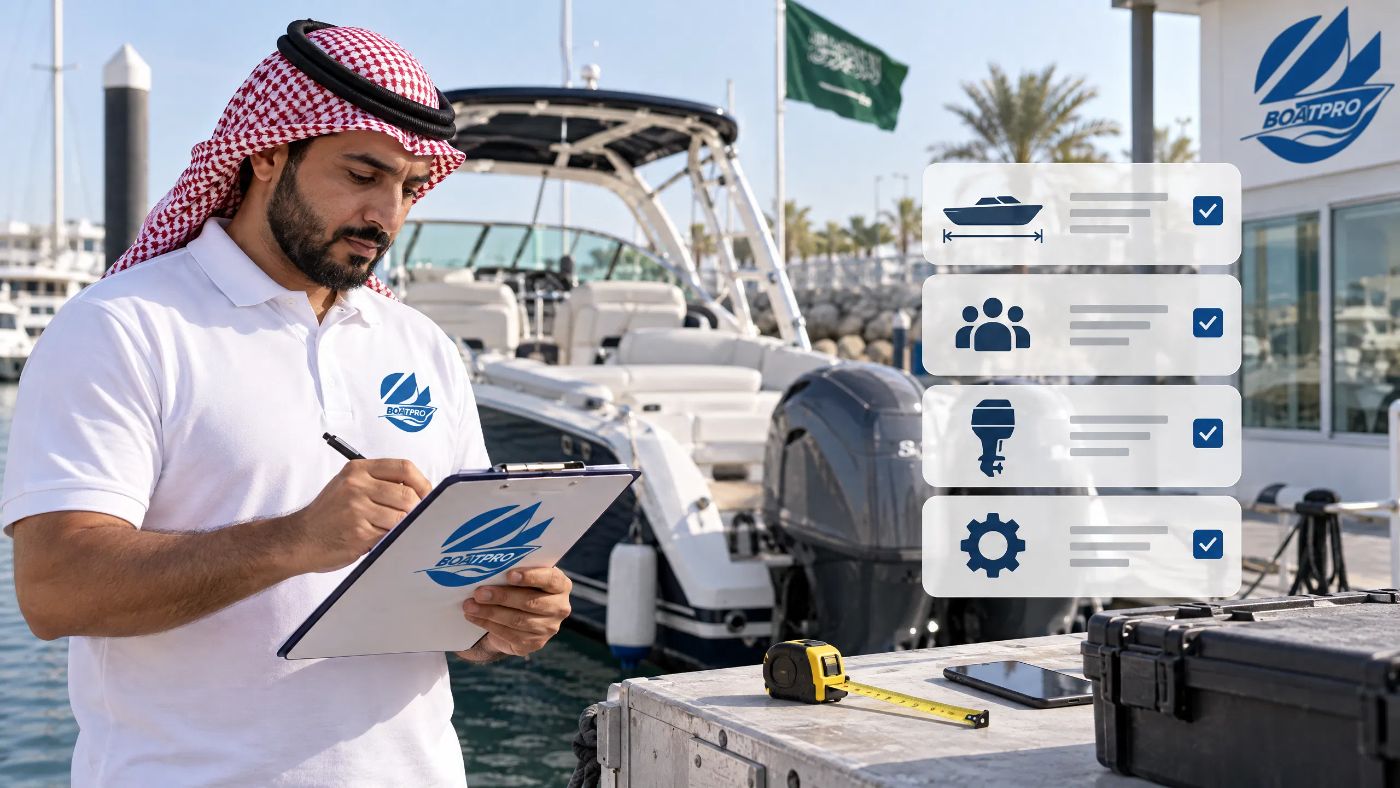
Before contacting a marine platform such as BoatPro, it is helpful for owners to collect their vessel information in an organized file that clearly identifies the type of vessel and its main specifications. A boat listing can be difficult to understand when information is scattered across separate photos and incomplete notes, or when important details—such as the permitted passenger capacity, available equipment, and vessel location—are unclear.
Preparing a vessel information file helps organize the details in a format that is easier to review and compare. It can also reduce the need for repeated questions about missing information. An accurate description helps prevent confusion between the vessel’s approved passenger capacity and the number of people the owner would prefer to accommodate. It also distinguishes facilities that are actually available onboard from services that may be arranged upon request.
Another practical benefit is that an organized file helps the receiving party understand the vessel and its proposed use, whether it is intended for leisure outings, private marine trips, or another suitable activity. Owners can refer to the same file and update it whenever equipment changes, the vessel moves to another location, or new technical information becomes available.
However, completing the information required for a boat rental listing does not guarantee that the vessel will be accepted, published on an online platform, or receive more bookings. Such decisions depend on the platform’s requirements, verification procedures, operational considerations, and commercial policies.
What Essential Information Should Be Prepared About a Boat or Yacht?
The information required to list a boat on an online platform varies according to the type of vessel, the intended activity, and the platform’s procedures. Owners should therefore start with a general checklist to help collect and verify available information before contacting a specialized provider such as BoatPro.
This checklist is a general reference, not a standardized official registration form. It does not mean that every field is required in every situation.
| Information field | Why it matters | How to verify it |
|---|---|---|
| Boat or yacht name, if applicable | Helps identify the vessel in the file | Check the name used in the relevant documents or operational records |
| Vessel type | Identifies whether the vessel is a leisure boat, yacht, or another type | Review its classification and available documents |
| Manufacturer and model | Help identify the vessel’s category and specifications | Refer to the manufacturer’s data plate or original documents |
| Year of manufacture, if available | Provides additional identifying information | Check the documentation or manufacturer’s records |
| Length and basic specifications | Describe the vessel’s size and design | Refer to technical documents or reliable measurements |
| Engine type and available details | Provide important technical information | Check the engine data plate or maintenance records |
| Engine operating hours, if available | May help describe operating history | Check the meter or a reliable record rather than estimating |
| Approved capacity and permitted passenger count | Are essential safety and operational details | Check the relevant approved documents or competent authority, as applicable |
| Equipment and facilities | Show what is actually available onboard | Inspect the vessel and review the equipment list |
| Current location or marina | Identifies where the vessel is based | Confirm the location with the owner or operator |
| Intended use or proposed trips | Explains the purpose of the listing | Describe the actual intended use and proposed activity |
| Vessel condition and maintenance history | Help provide a realistic picture of its condition | Review available maintenance and inspection records |
| Owner or operator details | Support communication and verification of authority | Check contact information and evidence of authorization, where needed |
When preparing boat information for rental, avoid guessing any details that have not been confirmed. You can mark information as “Not currently available” in your internal file until it has been verified rather than entering an inaccurate value.
It is also advisable not to publish sensitive hull identification numbers, engine serial numbers, or document details in the public description. Share them only through a trusted channel if they are specifically requested and genuinely necessary.
After collecting the information, organize it into one file and retain supporting documents for each relevant detail. This makes the specifications easier to review and update later. Always check each platform’s requirements separately, as this general checklist does not replace its official form or procedures.
How Can Owners Write a Clear and Appealing Boat Description?
After collecting the essential information, boat owners need to write a description that explains the vessel’s specifications and intended uses in a straightforward way. When preparing a boat or yacht profile for an online platform, the goal is to provide accurate information that helps readers understand what the vessel actually offers, without exaggeration or unverified promises.
What Should a Boat Description Include?
Start by identifying the type of boat or yacht and its model, if known. Then state the approved passenger capacity and the number of passengers permitted onboard.
Next, describe the equipment and facilities that are actually available, the type of trip or activity the vessel is suitable for, and the departure location or marina. You can also include the trip duration and any included services if these have been clearly defined. Explain any conditions or restrictions that prospective customers should know before making an agreement.
It can also be useful to highlight a genuine feature that distinguishes the vessel, such as its design or available equipment, provided the claim can be verified.
This structure gives readers a clear picture of the vessel instead of relying on generic promotional phrases such as “the best marine experience.” Each boat should have its own description that reflects its actual specifications rather than repeating the same text across different vessels.
When contacting BoatPro, owners can prepare this description as part of their initial vessel information file and then check the platform’s requirements before submitting the details. An accurate description helps others understand the offering, but it does not guarantee that the vessel will be accepted or made available for booking.
What Photos Should Be Included in a Boat or Yacht Information File?
Clear photos help present a realistic picture of a boat or yacht and complement the written information in its file. Owners should prepare a collection of recent photos showing the vessel’s appearance, condition, and onboard equipment rather than relying on a single image that does not reveal all the relevant details.
The most suitable photos depend on the vessel’s type, design, and the information that needs to be documented.
Recommended Photo Checklist
Before contacting a marine platform such as BoatPro, owners can prepare the following photos:
-
An exterior photo showing the entire vessel.
-
Photos from different angles showing its overall appearance and condition.
-
Photos of the deck and seating areas.
-
Photos of the interior spaces and cabins, if applicable.
-
A photo of the dashboard and control areas, where appropriate.
-
Photos of the equipment mentioned in the description.
-
Photos of the engine or technical areas when necessary and safe to take.
-
Recent photos that accurately reflect the vessel’s current condition.
How Should Owners Prepare Their Photos Before Sending Them?
Take photos in good lighting, tidy the area, and remove distracting items that do not provide useful information. Choose angles that show the details clearly, and avoid hiding significant defects or editing images in a way that suggests equipment is available when it is not.
The photos should belong to the actual vessel and be recent enough to reflect its current condition. Owners can save them in an organized folder, naming each image according to its content, such as “Exterior Deck,” “Seating Area,” or “Dashboard,” while retaining the original files.
There is no fixed number of photos suitable for every vessel. Owners should therefore check the receiving platform’s requirements for image quantity, file size, and resolution before submitting their materials.
How Can Owners Accurately Describe Passenger Capacity, Equipment, and Services?
When preparing a boat or yacht information file, owners must distinguish between verified information and details that depend on their preferences or individual arrangements. This distinction helps create a clear listing and prevents information from being misunderstood.
First, approved passenger capacity means the number of passengers permitted under the documentation and requirements applicable to the vessel. It is not the number the owner would prefer to accommodate. Owners should not estimate passenger capacity based on the boat’s apparent size or available space. Instead, they should verify the permitted capacity and comply with the relevant safety requirements.
Second, owners should distinguish between equipment that is already onboard and equipment that can be provided upon request. For example, if the boat has an outdoor seating area, this can be stated directly. If certain equipment requires advance arrangements, that condition should be explained instead of presenting it as currently available.
The same principle applies to services included in a trip. Specify exactly what is included in the price or agreement, and separate any additional service that may require an extra charge or separate arrangements.
| Information type | Accurate wording |
|---|---|
| Passenger capacity | State the permitted passenger count according to the relevant documentation |
| Equipment | “An outdoor seating area is available,” if it is actually present |
| Services | “The trip includes the service specified in the agreement” |
| Technical specifications | Include details that can be verified through documentation or inspection |
General promotional claims, such as describing a boat as the best or the most spacious, are no substitute for actual specifications. The more accurate the information, the easier it becomes to understand and review the offering before submitting it to a marine platform.
How Can Owners Prepare Trip Details, Location, and Availability Information?
Preparing boat information for rental involves more than technical specifications and photos. It also includes details about the trips or services the owner intends to offer. These details explain how the vessel will be used, where trips will depart from, and what conditions prospective customers should understand before making an agreement.
Owners can begin by identifying the city, marina, or departure point. They should then describe the types of trips they can genuinely provide, the expected duration of each trip, and the activities that are available and permitted.
It is also important to identify the days and times when the vessel can operate, the services included in the experience, and any operational restrictions or conditions that guests need to know in advance.
If pricing information is required, owners should state the price and explain how it is calculated—for example, whether it depends on the trip duration or the agreed service, where applicable. They can also include a rescheduling or cancellation policy if one has been established and clearly communicated by the owner or operator.
Keep in mind that entering a date in a file does not automatically mean that the vessel is available at that time. Similarly, specifying a price does not necessarily mean that the service is ready to be offered for sale. Owners should update dates, prices, and conditions whenever they change and verify the information before sharing it with a platform.
To understand the factors involved in planning a marine trip, owners and prospective guests can consult a relevant guide on choosing a marine trip in Saudi Arabia. Those interested in selecting a yacht can also explore BoatPro’s published marine content for guidance on yacht selection and trip planning.
Once these details have been collected, owners will have a more organized file to review and update before contacting BoatPro, while taking the platform’s requirements and the proposed activity into account.
What Documents and Regulatory Information Should Owners Review?
Before submitting a boat or yacht file to a marine platform, owners should do more than collect photos and technical specifications. They should also review documents that support the vessel’s details and help establish whether it is suitable for the proposed activity.
The required documents vary according to the vessel type, operating location, and intended use. There is therefore no single checklist that can be considered mandatory for every owner and every situation.
General Document Checklist by Vessel Type and Activity
Depending on the circumstances, owners can begin by reviewing the following documents and information:
-
Evidence of boat ownership or the right to operate or manage the vessel.
-
Registration documents and relevant maritime documentation.
-
Permits and licenses required for the proposed activity, where applicable.
-
Documents relating to the captain or operator and any required qualifications, depending on the nature of the operation.
-
Safety documents and equipment records relevant to applicable requirements.
-
Insurance documents or other supporting documents requested by the competent authority or associated with the activity.
This is an initial review checklist, not confirmation that every document is required from every owner. Preparing these documents does not necessarily mean that all licensing requirements have been met or that the vessel will be accepted for listing.
How Can Owners Check the Applicable Requirements in Saudi Arabia?
Owners should consult the competent authority relevant to the activity and operating location and review the latest published regulations and instructions before commencing operations.
For example, the Saudi Red Sea Authority publishes information about licenses and services related to certain marine tourism activities, including yacht rental. The authority has also announced specific requirements for leisure boat rental within its jurisdiction. Owners should therefore verify the scope of the applicable requirements and their effective dates before relying on them.
It is important to distinguish between preparing documents for private review and publishing them in a boat description. There is generally no need to display sensitive document numbers or share document images with an untrusted party. Instead, confirm the receiving party’s identity, communication channel, and document requirements before sending anything.
How Can Owners Organize Information for Multiple Boats or Yachts?
Owners who manage more than one boat or yacht can use separate vessel files to review and update information without mixing up specifications, photos, or documents. An internal tracking table can help them monitor the status of each file and identify information that needs to be completed before contacting a marine platform such as BoatPro.
The table can include the following fields:
| Vessel name | Type and model | Approved capacity | Location | Information status | Photo status | Last updated |
|---|---|---|---|---|---|---|
| [Boat 1 name] | [Type and model] | [Documented capacity] | [City or marina] | Complete / Needs review | Ready / Needs updating | [Date] |
| [Boat 2 name] | [Type and model] | [Documented capacity] | [City or marina] | Complete / Needs review | Ready / Needs updating | [Date] |
It is advisable to store shared contact details in a separate file while linking each vessel to its own specifications, photos, and documents. Owners should also record the date of the most recent review, especially when the vessel’s location, equipment, documented capacity, or operating conditions change.
This approach helps organize information for an entire fleet and makes it easier to identify files that need updating before submission. It is an internal organizational method that can be implemented using a standard spreadsheet or electronic file. It does not mean that BoatPro currently provides a dedicated fleet-management dashboard.
Common Mistakes to Avoid When Preparing a Boat Information File
A vessel’s information file may contain many details, but a few common mistakes can make it unclear or result in inaccurate information being submitted. Before sharing the file, owners should review it carefully and focus on the following points.
| Common mistake | Recommended correction |
|---|---|
| Writing a generic description that does not identify the vessel | State the vessel type, model, and verifiable specifications |
| Using old photos or photos of another vessel | Photograph the actual vessel and retain recent original images |
| Stating an unverified passenger capacity | Check the applicable documents and requirements before specifying the passenger count |
| Listing equipment that is not available | Inspect the vessel and match the description to the actual equipment |
| Omitting the departure location | Identify the city, marina, or departure point, as appropriate |
| Leaving prices or conditions outdated | Review the price, included services, and conditions before submitting the file |
| Confusing an inquiry with a confirmed booking | Clearly state the status of the request and do not describe an inquiry as a confirmed booking |
| Hiding important trip restrictions | Disclose significant restrictions before reaching an agreement with the customer |
| Sending sensitive documents to an untrusted party | Verify the recipient’s identity and communication channel before sharing documents |
| Assuming every platform accepts the same vessels | Ask about the platform’s acceptance criteria and submission requirements |
Owners do not need to rewrite every detail each time they review their file. Instead, they can revisit the sections covering specifications, photos, passenger capacity, and equipment, then check that the information is consistent throughout.
The purpose of preparing a boat information file is to provide clear, accurate, reviewable information—not simply to fill in as many fields as possible.
Before contacting BoatPro, make sure the information reflects the vessel’s actual condition and that any details about prices, dates, or services are based on confirmed information. Check the platform’s requirements and procedures before assuming that the vessel will be accepted or made available for booking.
Checklist Before Sending Boat Information to a Marine Platform
Before sending boat or yacht information to a marine platform, take time to review the file and confirm that the information, photos, and documents are consistent and accurately reflect the vessel’s current condition.
The following checklist can help you identify missing details and update information before contacting a platform, whether you are preparing a file for one boat or organizing information for an entire fleet.
Pre-Submission Review Checklist
-
I have verified the boat’s essential information.
-
I have reviewed the vessel type, model, and year of manufacture, if available.
-
I have confirmed the permitted passenger capacity using the relevant documentation.
-
I have prepared recent photos of the actual vessel.
-
I have written an accurate description that matches the vessel’s real specifications.
-
I have identified the equipment and facilities available onboard.
-
I have specified the location, marina, or departure point where necessary.
-
I have included trip details and the services provided, if I am offering a marine experience.
-
I have reviewed prices, conditions, and dates, if required.
-
I have checked the documents and licenses relevant to the proposed activity.
-
I have verified the official communication channel and the platform’s requirements.
-
I have retained an updated copy of the information file and photos.
This checklist is a general review tool, not an official acceptance checklist for BoatPro or any other platform. Additional information may be needed depending on the vessel type, proposed activity, and receiving party’s requirements.
How Can Boat Owners Prepare to Contact BoatPro?
BoatPro describes itself as a marine technology platform designed to connect guests with boat and yacht owners, marinas, and marine service providers. If you want to learn how to submit your vessel information or ask about joining requirements, preparing the essential details in advance can help you explain your needs clearly.
Before contacting the team, consider preparing the following information:
-
Your role: Are you contacting the team as the boat owner, operator, or a person managing the vessel on the owner’s behalf?
-
Number of vessels: How many boats or yachts do you own or manage?
-
Basic specifications: The type, model, documented capacity, and general condition of each vessel.
-
Location: The city or marina where each vessel is based.
-
Intended use: The types of trips or marine experiences you would like to offer, if applicable to your activity.
-
Questions: Any questions about joining requirements, required documents, and the steps currently available.
You can use the official BoatPro contact page to ask about the procedures relevant to your situation. Before sending documents, make sure you are using an official communication channel and share sensitive information only when necessary and through a trusted channel.
It is also important to check the app’s launch status and the current joining procedures at the time of publication. The availability of a contact channel does not necessarily mean that boat listing or activation is currently available. Do not assume that submitting information will automatically result in acceptance or booking availability.
Prepare your vessel information, then contact BoatPro to ask about the joining requirements and procedures currently available.
Frequently Asked Questions About Preparing Boat Information
What information is required to list a boat on a marine platform?
A vessel file typically begins with the boat type, model, basic specifications, capacity, location, photos, and contact details. The platform may request additional information or documents depending on its requirements and the intended use.
How can I write a professional description of my boat?
State the boat type, model, documented capacity, available equipment, intended use, and location. Include any services that are actually provided, where applicable. Use accurate, verifiable information and avoid exaggeration.
What photos are suitable for listing a yacht?
Prepare recent, clear photos showing the entire yacht from the outside, its seating areas, interior spaces, and relevant equipment. Make sure the photos show the actual yacht and check the platform’s requirements before submitting them.
Should I include the approved capacity and permitted passenger count?
Yes. When listing a boat for an activity involving passengers, you should specify the permitted capacity according to the applicable documentation and requirements, rather than relying on your own estimate.
What documents might a platform request from a boat owner?
These may include proof of ownership or authorization to operate the vessel, registration documents, licenses relevant to the activity, and other supporting documents depending on the circumstances. Review the applicable official requirements and platform conditions before preparing the final submission.
Is the information required for a boat rental listing different from that required for a boat sale?
Yes. A sale listing generally needs information that helps prospective buyers assess the vessel’s condition, specifications, and maintenance history. A rental listing requires additional details such as passenger capacity, location, availability, price, conditions, and included services.
How can I prepare information for more than one boat or yacht?
Create a separate file for each vessel, use a consistent structure for the information fields, and record the date when the specifications, photos, location, and capacity were last updated. This helps prevent details from being mixed up between different vessels.
Can boat owners contact BoatPro to ask about joining?
You can use the official BoatPro contact page to ask about joining requirements and the procedures currently available. Sending an inquiry does not automatically mean that the vessel will be accepted or listed.
Does preparing the information guarantee that my boat will be accepted or receive bookings?
No. An organized file helps present the information clearly, but it does not guarantee acceptance, publication, or bookings. These outcomes depend on the platform’s requirements, service availability, and other factors.
How can I keep my boat information up to date?
Review the specifications, photos, location, capacity, equipment, prices, and conditions whenever something changes. Then update the information with the relevant party using its available update process, after confirming the applicable procedures.
Conclusion: A Clear Vessel Profile Starts with Accurate Information
Preparing boat or yacht information before listing it on a marine platform involves more than writing a short description. It requires collecting accurate specifications, verifying passenger capacity, preparing recent photos, clarifying the location, equipment, services, and conditions, and reviewing the documents relevant to the proposed activity.
The more organized the information is and the more accurately it reflects the vessel’s actual condition, the easier it becomes for the relevant party to review the file and discuss the details.
Before submitting your information, distinguish between details you can verify and information that still requires review or official confirmation. Do not share sensitive documents through untrusted channels.
If you want to learn about the joining steps currently available to boat and yacht owners, visit the official BoatPro contact page and ask about the applicable requirements and procedures. Submitting information should not be taken as confirmation that a vessel will be accepted or made available for booking.